The answer, with sources
Are lucha libre tickets in Mexico City worth it? The tacos-and-arena night, explained
What the evening includes, how the two arenas differ, what the sport is and who says so: the listing, CMLL, Mexico News Daily and Wikipedia.
Choose my lucha libre night ↗Quick answer
Yes. This lucha libre night fills three to four hours of a Mexico City evening with tacos, a cantina round, a local guide explaining the history and the chants, and your tickets to Arena México or Arena Coliseo, with a host who stays with the group until everyone has a ride home. Guests rate it 4.9 out of 5, and you can cancel at least 24 hours ahead.
The night in six lines
| Point | What it is | Who says so |
|---|---|---|
| Length | Three to four hours | The listing |
| Group size | Up to twenty people | The listing |
| Arena México | Tuesdays, Wednesdays, Fridays, Sundays | The listing |
| Arena Coliseo | Saturdays | The listing |
| Included | Tacos, drinks, tickets, a local guide, a surprise souvenir | The listing |
| Not included | Gratuities, extra food, drink or souvenirs in the arena | The listing |
Why the answer is yes
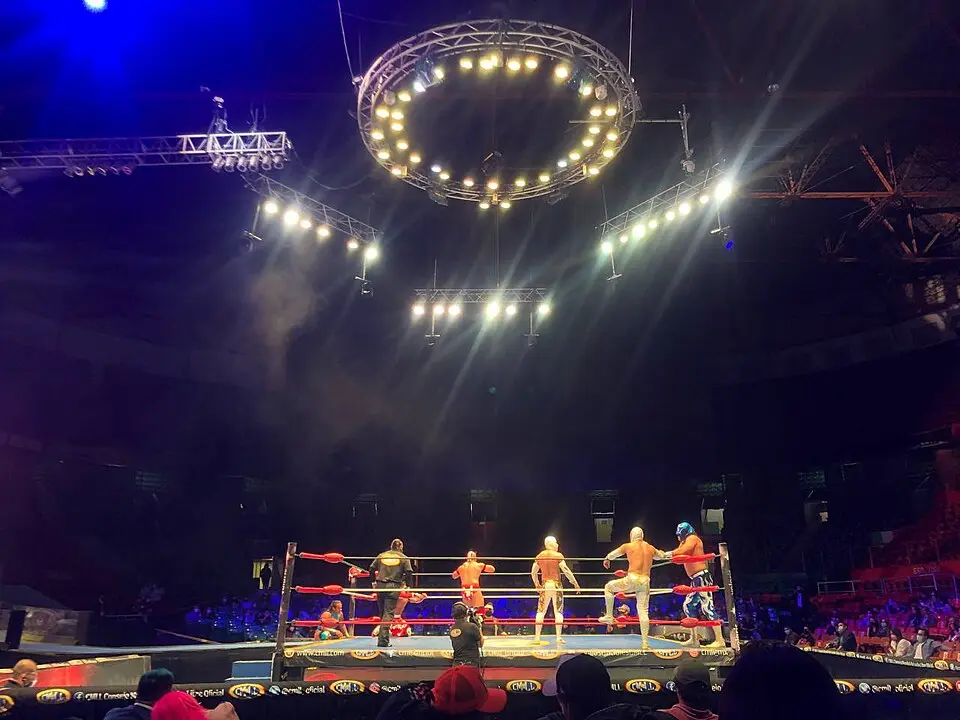
Yes, a lucha libre night earns an evening of a Mexico City trip, and this booking earns it more than a bare ticket would. Lucha libre is a spectator sport in which the crowd is half the show, and the hardest part for a first-timer is not knowing the rules, the characters or when to shout. This listing solves that before you reach the arena. You eat tacos, drink something cold in a cantina and hear the history, the chants and the nuances of the sport from a local host, and then you walk in with tickets already in your pocket. Everything below comes from the Viator listing, CMLL's own website, Mexico News Daily and Wikipedia, with the source named beside each fact.
The ticket, as the listing describes it
The Viator listing is titled Lucha Libre Tickets & Tacos & Beer & Mezcal and gives three to four hours, in groups of up to twenty. A local guide takes you to a taquería and a cantina, explains lucha libre as you eat and drink, and then takes you to the arena, with tickets included. The listing names tacos, a cold beer, mezcal or pulque, bottled juice or soda, a surprise souvenir and the tickets as included, and names gratuities and extra consumption or souvenirs in the arena as not included. It says to cancel at least 24 hours before the start for a full refund, and that the ticket can be shown on a mobile phone.
Which arena you get
The day of the week decides. The listing sends the group to Arena México on Tuesdays, Wednesdays, Fridays and Sundays, meeting in Roma Norte, and to Arena Coliseo on Saturdays, meeting at a market by Plaza Garibaldi in the Historic Centre. It calls Arena México the Cathedral of Lucha Libre and says it holds almost 17,000 people, and calls Arena Coliseo the oldest arena in the city, small, intimate and wild. The sister guide on this site compares the two in detail, but the short version is that there is no wrong choice: both are CMLL's own rooms, and both put the crowd right on top of the ring.
What lucha libre is
Mexico News Daily translates lucha libre as free fight, typically rendered freestyle wrestling, and credits Enrique Ugartechea with inventing it in 1863 on the model of Greco-Roman wrestling. It stayed mainly regional until 1933, when the Empresa Mexicana de Lucha Libre was formed. Wikipedia says Salvador Lutteroth founded that promotion, with a first show on 21 September 1933, and that it later became the Consejo Mundial de Lucha Libre, CMLL. Wikipedia describes CMLL's matches as scripted, storyline-driven and partially choreographed, and Mexico News Daily says most of the punches and kicks are fake, though the landings look painful. It is theatre with athletics, and the sport has a heritage tag: Wikipedia says that in 2018 the head of the Government of Mexico City declared lucha libre an intangible cultural heritage of the city.
Técnicos and rudos
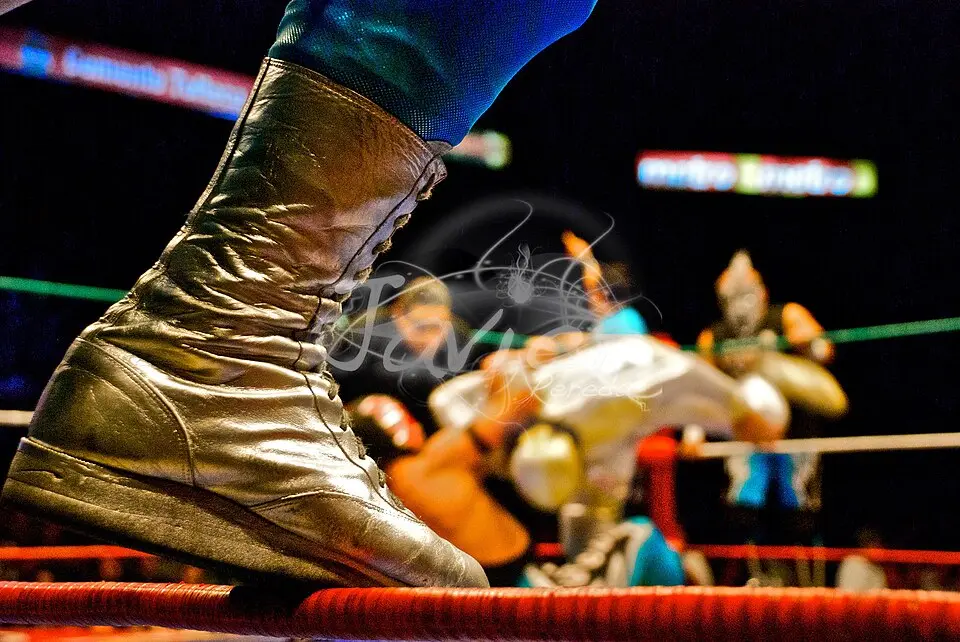
Wikipedia says luchadores are traditionally divided into two categories: rudos, who bend or break the rules and play the bad guys, and técnicos, who play by the rules as the good guys, the word meaning technicians. Mexico News Daily describes the matches as a contest between those two sides. Many bouts are two out of three falls, Wikipedia says, and a fall comes when a luchador is pinned and the referee counts to three, according to Mexico News Daily, which adds that a count of twenty applies to a ring-out. Wikipedia also notes that tag-team matches, especially trios of three against three, are especially prevalent in lucha libre. If a bout looks like a morality play with elbow drops, that is the point.
The masks
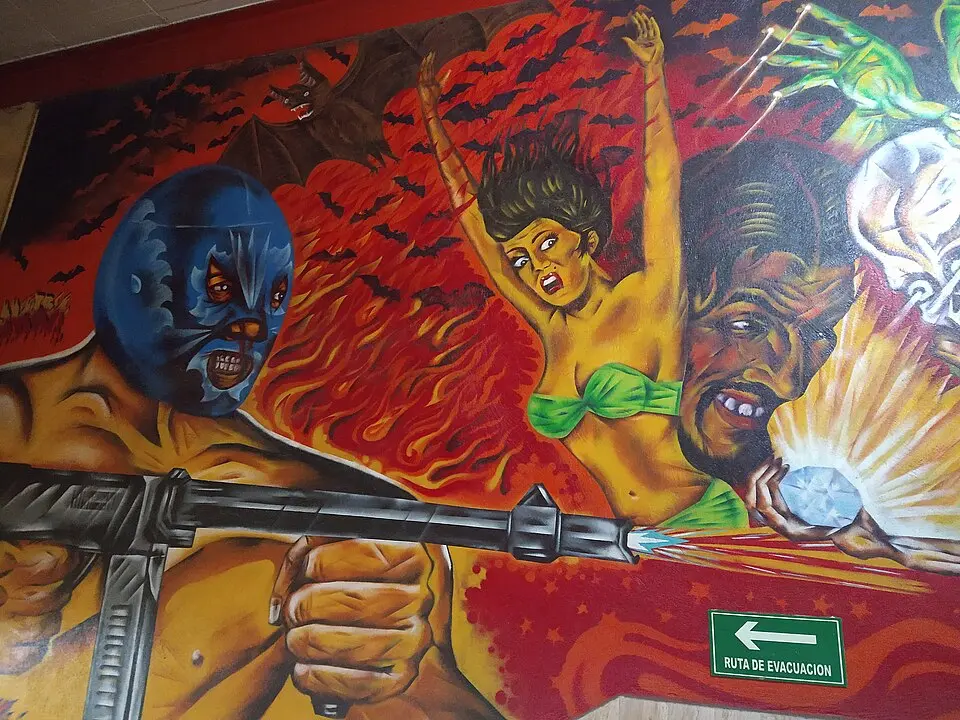
Wikipedia dates the first masked wrestlers in Mexico to about the 1920s, with masks everywhere by the 1930s, and says the mask is treated as sacred to a degree, so a wrestler who tears off an opponent's mask entirely can be disqualified. In a mask-versus-mask match the loser is unmasked by the winner and must reveal his identity, a defeat that can damage a career. Wikipedia names El Santo, who won the mask of Black Shadow in 1952, as the figure who made wrestling a cultural phenomenon in Mexico, and says he was buried in his silver mask. Mexico News Daily says almost all luchadores now wear masks, and some never appear in public without them.
The crowd and the chants
Mexico News Daily says the crowd starts quiet and grows louder and rowdier as the matches go on, with trash talk between luchadores and fans that is mostly good-natured. Common shouts include a warning when someone is tossed from the ring and a call for more when an opponent is hit. It also says luchadores sometimes sit on spectators' laps and that tossed wrestlers can land on people in the front row, so a ringside seat is not for the nervous. The listing's chant lesson in the cantina is meant to give you the words before you need them.
The food and drink stops
The listing names tacos, then a cantina, where it names beer, mezcal and pulque. Wikipedia says pulque is a milky, somewhat thick drink with a sour, yeast-like taste, made from the sap of the maguey plant and typically two to seven percent alcohol by volume, sacred before the Spanish arrival and sold in bars called pulquerías. It says mezcal is distilled from cooked agave hearts, often in underground pit ovens, which gives it a smoky flavour, and that it is usually drunk straight with orange slices and worm salt. The listing does not say which of the three you will be poured, so ask your host.
Getting there and getting home
The exact meeting point arrives by message the night before, with your host's name and contact. The listing says phone calls are not monitored, so write through the platform or message your host on the day. After the show, the hosts walk back with the group, to Roma on Arena México nights and to Plaza Garibaldi on Saturdays, and stay until everyone has been picked up by Uber or a similar service. Wikipedia notes that theft and bar-bill scams have been reported around Plaza Garibaldi, especially on side streets, so use the group and a ride app rather than wandering.
The days and the calendar
The listing runs the night on Tuesdays, Wednesdays, Fridays, Saturdays and Sundays. On 25 November 2026 CMLL's own website listed Arena México shows for Tuesday 24 November, a Wednesday 25 November special and Friday 27 November, plus a Thursday 26 November special at Arena Coliseo, so the promotion's programme is not identical week to week. Wikipedia says the Friday show at Arena México is the promotion's biggest of the week. Pick a date in the booking calendar and read what it offers rather than assuming a fixed card.
How the arenas fit the evening
Wikipedia says Arena México is CMLL's headquarters, with the Friday show the biggest of its week, and that Arena Coliseo, which opened on 2 April 1943, is also owned by CMLL. The tacos and the cantina are timed to bring the group to either door in good spirits. Because the two rooms are so different in size, the same chants sound different in each, and the listing's lesson prepares you for both.
Who it suits
The listing says the evening is suitable for all fitness levels and allows service animals, and the booking page lists travellers from 16 up. It asks you to tell the hosts if anyone in your group is 16 to 18. It is a loud, late, crowded evening, so anyone who wants a quiet dinner will enjoy a different night more, and the listing asks everyone to arrive on time because late arrivals may not be able to join.
What it does not include
The listing says gratuities and additional food, drink or souvenirs in the arena are not included, and suggests some cash for souvenirs, drinks and tips. It adds that tips for your host are appreciated but never expected. It does not say which section of the arena you sit in, so that question goes to the booking page and the hosts.
Ratings, in context
Viator's product data puts the combined score at 4.9 out of 5 across 2,280 reviews, 1,666 on Viator and 614 on Tripadvisor. Of those, 2,177 are five-star reviews, about 95 percent, and 15 are one-star. Those are guest scores, not a verdict by an independent critic, but a score that high over that many reviews is the main reason the answer here is a confident yes.
How to book it
Use the button to reach Viator and choose a date; the day fixes the arena and the meeting area. Availability and the fare in your own currency show on that page, and the listing refunds in full when you cancel at least 24 hours ahead. If you book through the button, Viator shares a fee with this guide at no extra cost to you; the guide itself has no tie to CMLL, either arena or the tour host.
Frequently asked questions
Are lucha libre tickets in Mexico City worth it?
Yes. It is three to four hours with tacos, a cantina round, a local guide and your arena tickets, and guests give it 4.9 across 2,280 reviews.
Do I need to speak Spanish?
The listing names an English-language guide, so the lesson and the group are in English. The crowd shouts in Spanish, which is part of the fun.
Is the arena ticket really included?
Yes: the listing includes tickets for the event. It does not say which section you sit in.
What should I bring?
The listing suggests comfortable clothes, a camera and some cash for souvenirs, drinks and tips.
Can I cancel?
Yes, at least a day ahead, and you are refunded.
Sources
- Viator, Lucha Libre Tickets & Tacos & Beer & Mezcal (the booking listing)
- CMLL, the promotion's own website (shows and arenas)
- Mexico News Daily, Behind lucha libre's comedy and theatrics lies generations of dedication
- Lucha libre, a Wikipedia article
- Consejo Mundial de Lucha Libre, a Wikipedia article
- Arena México, a Wikipedia article
- Arena Coliseo, a Wikipedia article
- El Santo, a Wikipedia article
- Pulque, a Wikipedia article
- Mezcal, a Wikipedia article
- Plaza Garibaldi, a Wikipedia article