The show
Técnicos, rudos, masks and chants: how to follow a lucha libre night
The characters, the rules and the crowd, explained for a first-timer, from Wikipedia and Mexico News Daily.
Choose my lucha libre night ↗Quick answer
Yes, you can follow it from the first bell. Lucha libre splits its wrestlers into técnicos, who follow the rules, and rudos, who break them; most bouts run to two out of three falls; masks are treated as close to sacred; and the crowd answers every move with a shout. The host on this booking explains the history, chants and nuances before you reach the arena.
Lucha libre in six terms
| Term | Meaning | Who says so |
|---|---|---|
| Técnico | A wrestler who plays by the rules, the good guy | Wikipedia |
| Rudo | A wrestler who bends or breaks the rules, the bad guy | Wikipedia |
| Two out of three falls | The usual bout format | Wikipedia |
| Trios | Three against three, very common | Wikipedia |
| Máscara contra máscara | A match where the loser is unmasked | Wikipedia |
| Luchador | A lucha libre wrestler | Mexico News Daily |
Start with the two sides
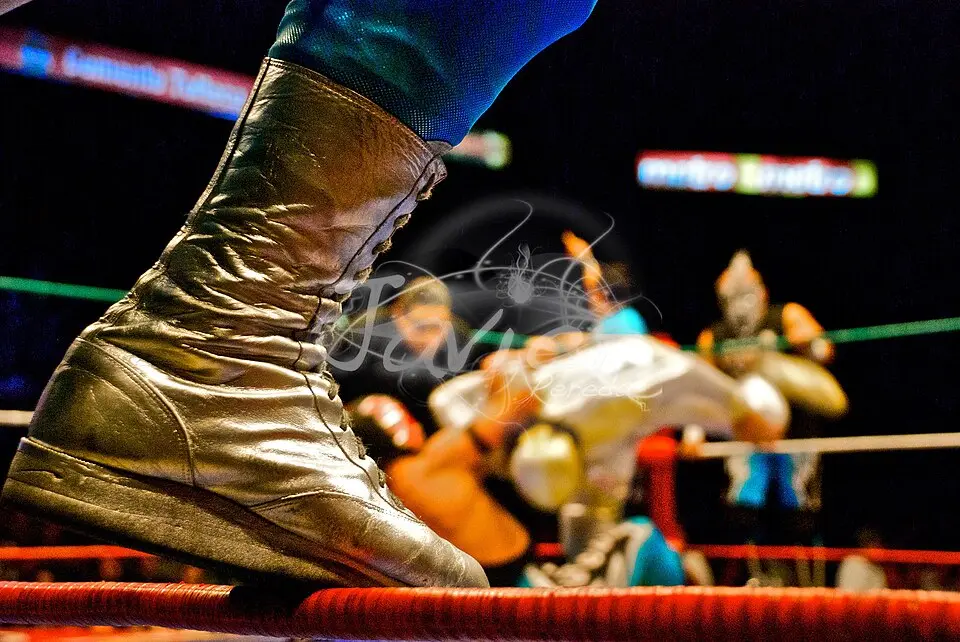
Wikipedia says luchadores are traditionally divided into two categories. Rudos bend or break the rules and are the bad guys. Técnicos play by the rules, are the good guys, and the word means technicians. Mexico News Daily describes bouts as técnicos against rudos. Once you know which side a masked figure is on, the logic of the evening opens up: the técnicos win your sympathy with clean, athletic moves, and the rudos earn their boos with shortcuts.
How a bout is scored
Wikipedia says many lucha libre promotions hold matches as two out of three falls, a format it notes was once standard for title matches in the United States and Japan but largely abandoned there by the 1970s. Mexico News Daily says a fall occurs when a luchador is pinned and the referee counts to three, and that a ring-out count is twenty. So a bout is not over at the first pin: it is a short story in up to three chapters, and a team that loses the first fall can still win the match.
Trios and the tag-team tradition
Wikipedia says tag-team wrestling is especially prevalent in lucha libre, particularly trios matches, which involve three-member teams. It adds that a referee can stop a multi-person tag match for excessive punishment and award the match to the victim. For a spectator, trios mean constant movement at the ropes, tag-ins that are not always polite and a ring that is rarely quiet. It is the format most likely to put a high flyer in the air.
Why the mask matters

Wikipedia ties the mask to lucha libre from its beginnings and to an older meaning going back to the Aztecs, and puts the first masked wrestlers in Mexico around the 1920s. It describes the mask as sacred to a degree, so fully removing an opponent's mask is grounds for disqualification. In a mask-versus-mask match, the loser must unmask and reveal his identity, which Wikipedia says can seriously damage a career. Wikipedia also says the masks have become iconic symbols of Mexican culture and appear in the paintings of contemporary artists.
El Santo and the silver mask
Wikipedia gives El Santo's real name as Rodolfo Guzmán Huerta, born on 23 September 1917, and says he became El Enmascarado de Plata, the Silver-Masked Man, in 1942. It says he appeared in at least 53 luchador films between 1958 and 1982, was buried in his silver mask and that about 10,000 people attended his funeral. Wikipedia calls him the most famous and iconic Mexican wrestler. You do not need to know his story to enjoy the show, but you will see his silhouette on murals, T-shirts and masks all around the arena.
The wager match
Wikipedia says wager matches are central to many lucha libre feuds, so title matches play a less prominent role in Mexico than in America. A luchador who loses a wager would rather be unmasked or have his head shaved than dishonour his bet. That is why a mask-versus-mask bout is the high point of a feud, and why the crowd cares so much when one is announced.
What the crowd does
Mexico News Daily says crowds start quiet and grow louder and rowdier as the matches go on. Common shouts include a warning when someone is tossed from the ring and a call for more when an opponent is hit. Trash talk between luchadores and fans is common and mostly good-natured, and luchadores sometimes sit on spectators' laps. The article's advice for a first-timer is not to sit in the front row, since tossed luchadores sometimes land on people there.
Is it real?
Wikipedia describes CMLL's matches as scripted, storyline-driven and partially choreographed. Mexico News Daily says most of the punches, kicks and slams are fake, though the landings on thin mats over wooden slats look painful, and it describes luchadores who train for years: one it interviewed trained for ten years before his first match, and says he trains two to three hours every day. The athleticism is real even when the finishes are planned.
How the listing helps

The Viator listing says the host introduces the history, chants and nuances of lucha libre while the group eats tacos and drinks in the cantina, before heading to the arena. That is the part of the night most useful to a first-timer, because the rules are simple once you know them and the chants are the way to join in. The listing also says the evening suits all fitness levels.
Frequently asked questions
What is a técnico?
A wrestler who plays by the rules, the good guy, according to Wikipedia.
What is a rudo?
A wrestler who bends or breaks the rules, the bad guy, according to Wikipedia.
Can a wrestler lose his mask?
Yes, in a mask-versus-mask wager match the loser is unmasked, according to Wikipedia.
Is the front row safe?
Mexico News Daily advises first-timers not to sit in the front row, since tossed wrestlers sometimes land on people there.
Will the host explain the rules?
The listing says the host introduces the history, chants and nuances of lucha libre before the show.
Sources